Extrusion
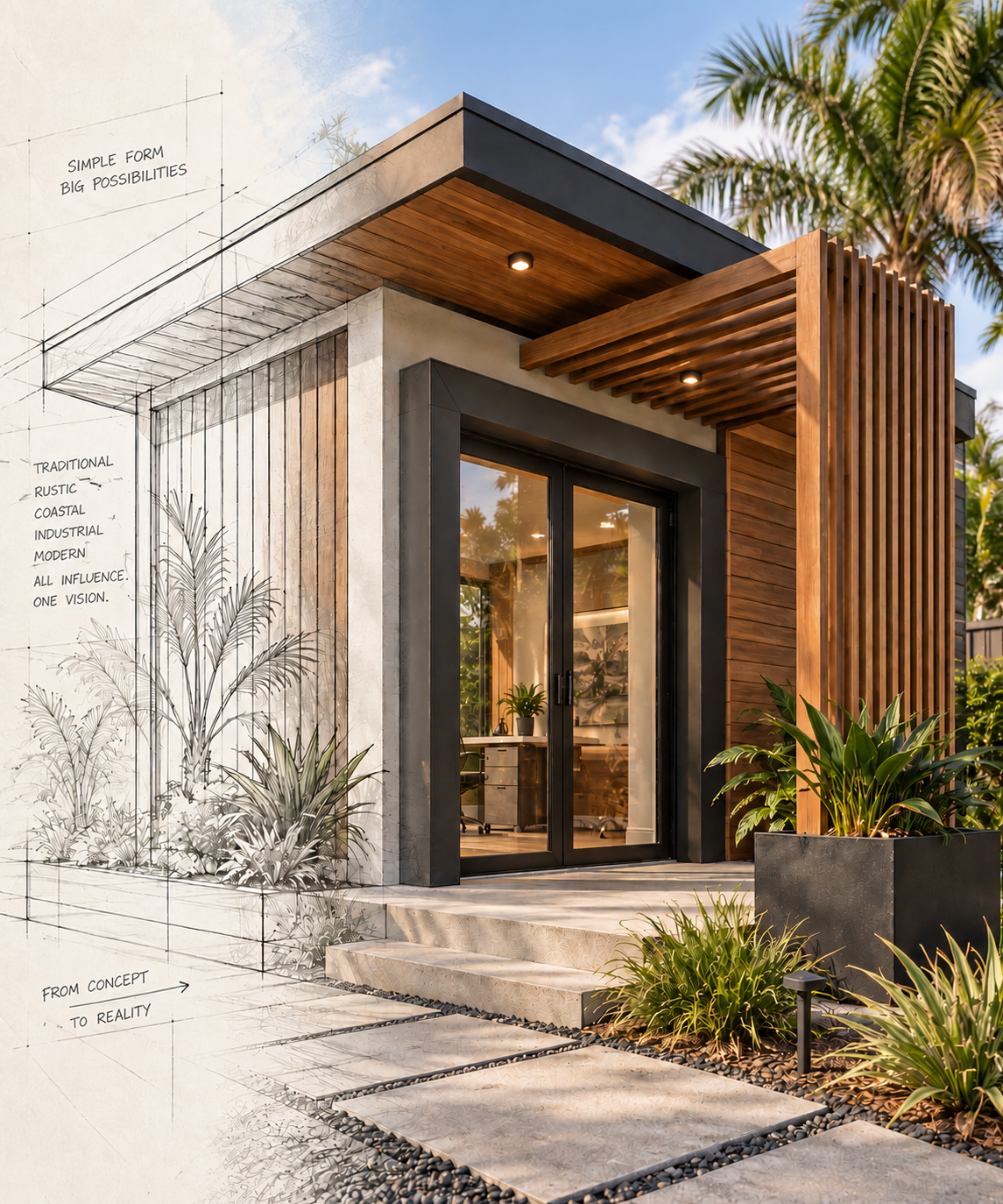
Projected planes, recessed openings, and layered elements create shadow, definition, and architectural depth.
ABOUT SHED UP
Shed Up begins with a simple structure and pushes it further — through proportion, materials, depth, detail, and purpose — until it becomes something architectural.
THE IDEA
Every Shed Up project starts with a practical need. Storage. A studio. A workspace. A retreat. But function is only the starting point.
We shape each structure through thoughtful proportions, architectural depth, material contrast, lighting, openings, and site relationships to create a space that feels designed — not simply built.
THE SHED UP SIGNATURE
Projected planes, recessed openings, and layered elements create shadow, definition, and architectural depth.
Wood, stucco, metal, glass, and texture are used deliberately to create visual hierarchy and character.
The design is shaped around how the space will actually be used, experienced, and lived in.
Lighting, landscaping, outdoor rooms, and site elements become part of the architecture rather than afterthoughts.
DESIGN DIRECTION
Modern design is the foundation of Shed Up. From there, traditional, rustic, coastal, industrial, or other influences can be introduced without losing the clean architectural character at the core of the design.
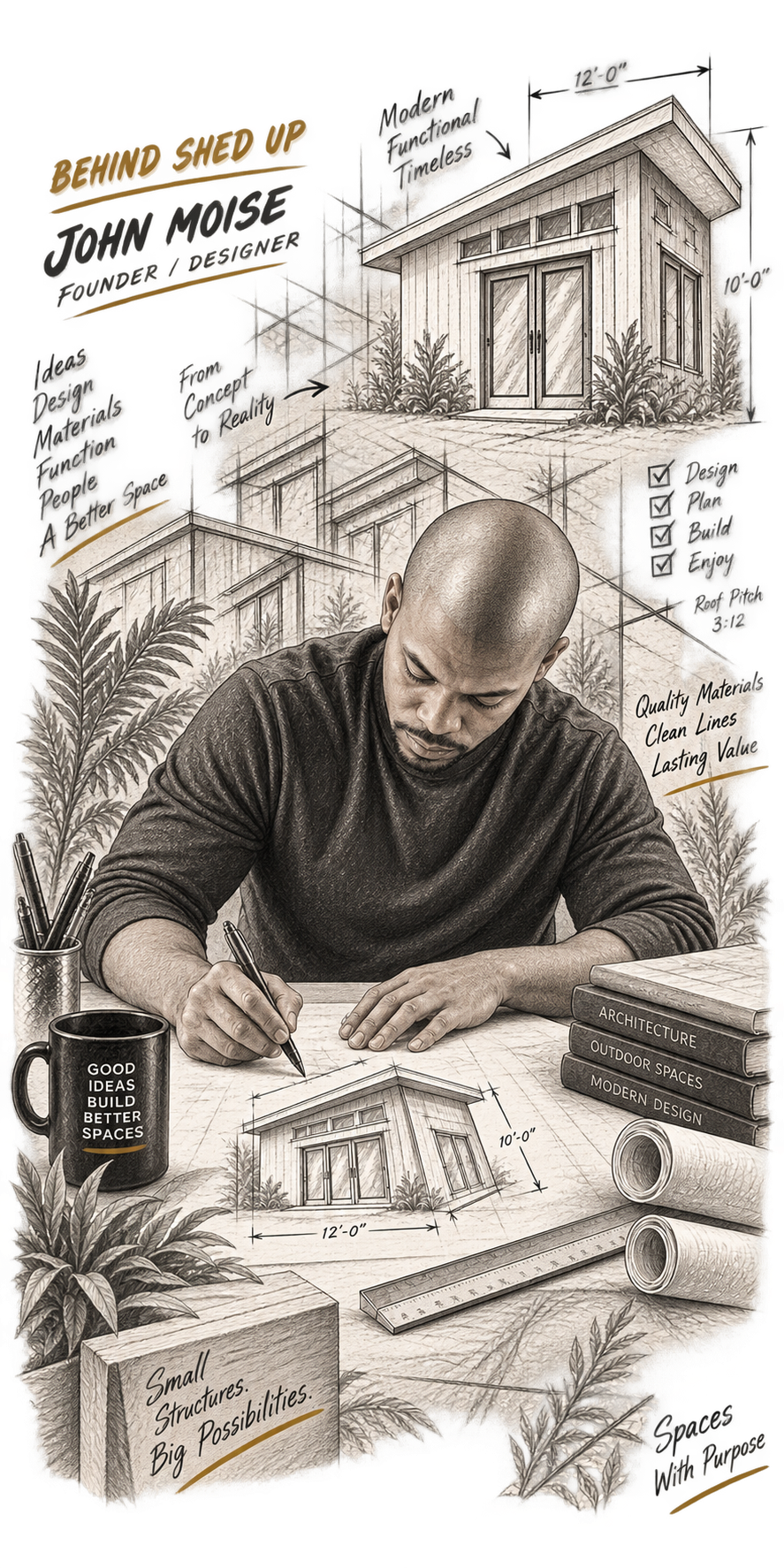
Shed Up was founded by John Moise around a simple idea: a small structure should never have to feel like an afterthought.
With a hands-on approach to building and a strong interest in architecture, furniture, materials, and functional design, John approaches each project as more than a structure. Proportion, openings, depth, material contrast, lighting, and the relationship between the building and its surroundings all become part of the design.
The philosophy is modern first — not because every project should look the same, but because modern design provides a clean foundation. From there, traditional, rustic, coastal, industrial, and other influences can be introduced to give each space its own character.
The goal is simple: build what is needed, then design what it could become.