More Than Storage: How an Outdoor Shed Can Improve Your Home
A well-designed shed does more than give you somewhere to put things. It can free up your garage, organize your outdoor life, create dedicated workspace, and change how your entire property functions.
More Than Storage: Why an Outdoor Shed Can Change How Your Home Works
When most people hear the word shed, they picture a place for lawn equipment, tools, holiday decorations, and everything else that no longer fits comfortably in the garage. Storage is certainly part of the equation—but a thoughtfully designed outdoor structure can offer much more.
The right shed can change the way you use your home. It can create breathing room inside the garage, give tools and equipment a permanent place, provide space for projects, and turn an underused part of the backyard into something genuinely useful. At Shed Up, we believe the best outdoor spaces begin by asking a simple question:
What could this space make easier?
Give the Garage Back Its Purpose
Garages have a way of becoming the default storage room. Lawn equipment moves in. Then bicycles. Tools. Holiday decorations. Pressure washers. Gardening supplies. Leftover building materials. Eventually, the vehicle the garage was designed for may be competing with everything else for space. A dedicated outdoor storage structure gives those items somewhere intentional to live.
Instead of moving equipment around every time you need something, frequently used items can be organized around how you actually use them. Larger equipment can have direct access through appropriately sized doors, while smaller tools and supplies can be stored on walls, shelving, or built-ins. The benefit isn’t simply having more storage. It’s having better-organized storage.
Convenience Is About Location
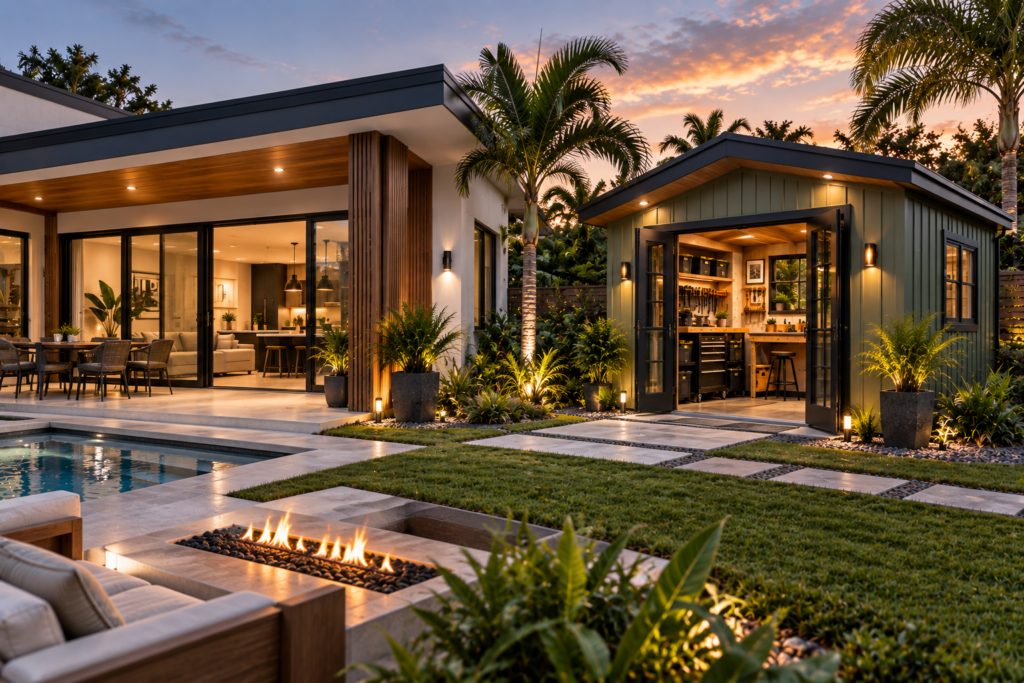
Where you store something can be just as important as how much storage you have. Garden tools stored near the garden make sense. Pool equipment near the pool makes sense. Lawn equipment near the yard makes sense. A detached shed allows storage to move closer to where those things are actually used.
Instead of carrying tools through the house or walking back and forth to the garage, an outdoor structure can become a central point for maintaining and enjoying the property. That small improvement in convenience becomes noticeable when it’s repeated week after week.
A Small Building Can Solve Several Problems
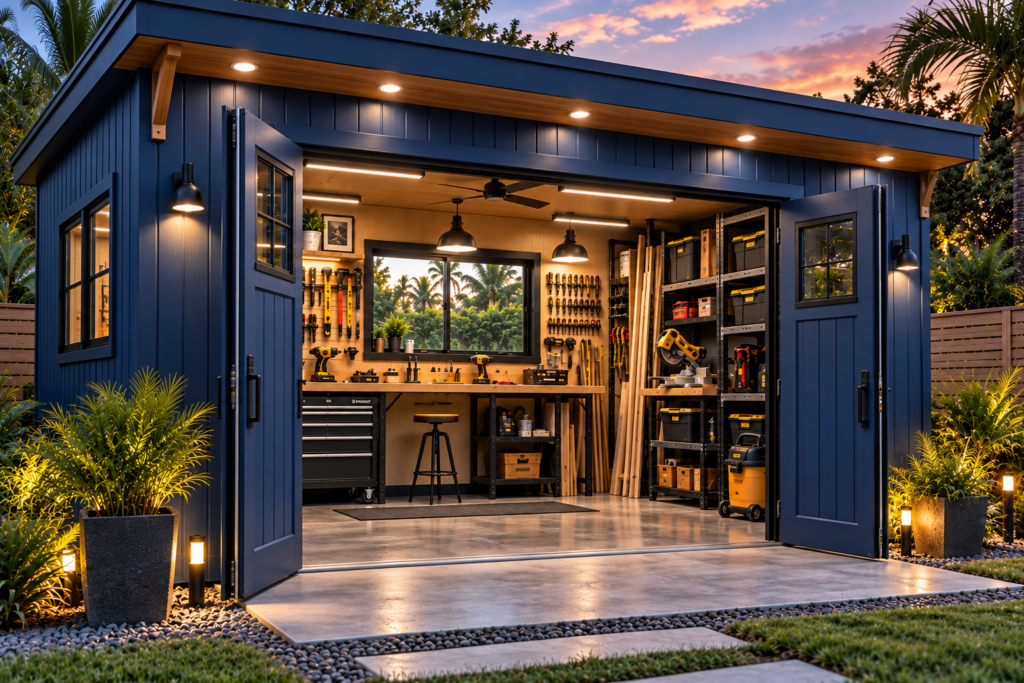
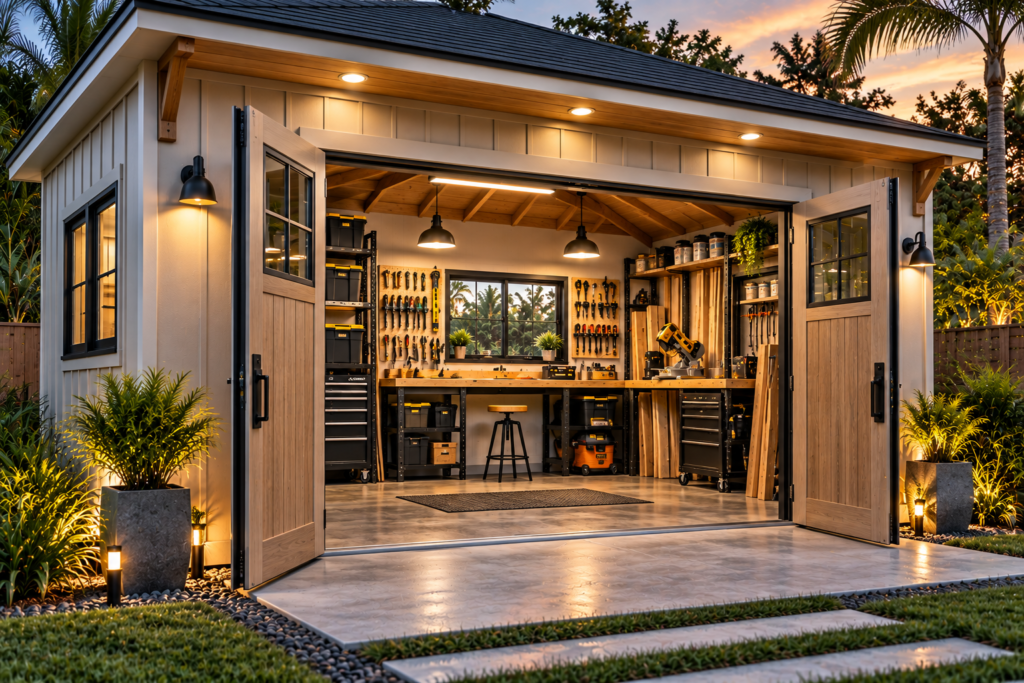
A shed doesn’t necessarily need to serve only one purpose. A thoughtfully planned structure might contain lawn equipment on one side and a workbench on the other. Another could combine garden storage with a potting area. A larger structure might provide general household storage while reserving a section for woodworking, crafts, or another hobby.
This is where design becomes important. In a small structure, every square foot matters. Wall height can provide vertical storage. Door placement can improve access. Windows can introduce natural light without sacrificing too much usable wall space. Built-ins can turn otherwise wasted areas into functional storage. The goal isn’t necessarily to make the structure bigger. It’s to make the available space work harder.
Create a Place Where Projects Can Stay Projects
One overlooked advantage of a dedicated workspace is being able to leave things where they are. Anyone who has used a kitchen table, garage floor, or patio as a temporary workbench knows the routine: set everything up, work for a while, then put everything away because the space is needed for something else. A dedicated workshop changes that.
The project can remain on the bench. Tools can stay organized. Materials can have their own storage areas. When it’s time to work again, the space is ready. That can make woodworking, repairs, gardening, painting, crafts, and other hobbies considerably easier to enjoy.
Storage Doesn’t Have to Look Like Storage
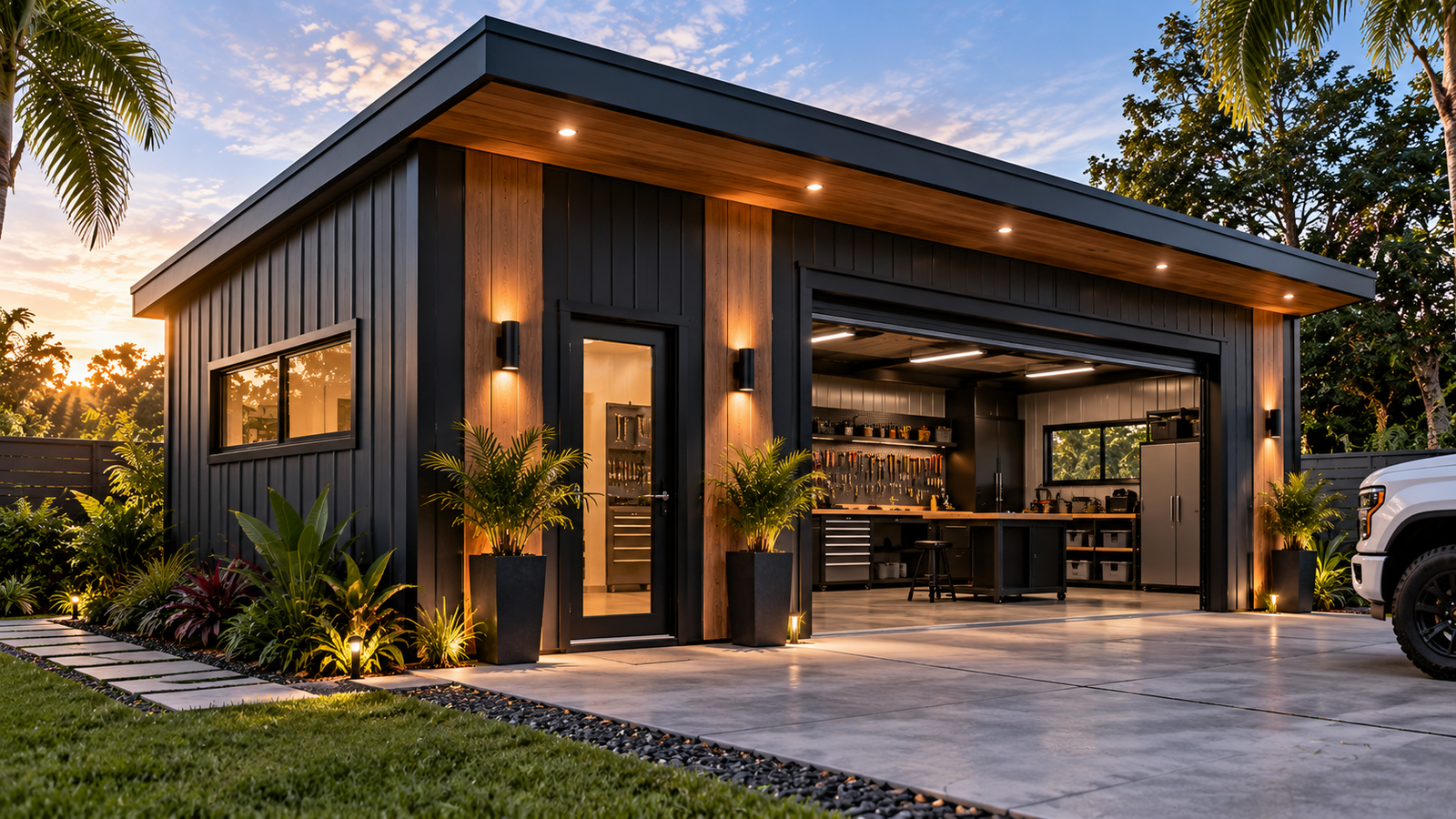
Function matters, but so does the way a structure relates to the rest of the property. A shed doesn’t have to look like an object that was simply dropped into the backyard. Roof form, siding, color, doors, windows, lighting, landscaping, and proportions can all help connect a detached structure visually to the home.
A modern house might inspire a clean lean-to form with dark siding and warm wood accents. Another property might call for a gable or hip roof while still maintaining contemporary proportions and detailing. The architecture can be different without feeling disconnected. That’s an important distinction.
Think About Tomorrow, Too
The way you use a shed today may not be the way you use it five years from now. Today’s storage building could eventually need a workbench. A gardening space might become a hobby room. Additional electrical outlets might become useful. Shelving may need to change as equipment changes.
Thinking about those possibilities during the design process can make the structure more adaptable. That doesn’t mean designing for every imaginable future use. It simply means considering how the space might evolve before deciding where everything goes.
More Space Without Changing the House
Adding usable space doesn’t always mean expanding the home. Sometimes the better solution is creating a smaller, purpose-built structure exactly where it’s needed. A well-designed shed can reduce clutter, improve organization, create workspace, support hobbies, and make outdoor equipment easier to access—all without changing the footprint of the main house.
And when architecture is considered alongside function, that practical structure can also become something worth looking at. Because a shed doesn’t have to be the building you hide behind the house.
It can be part of what makes the property work.