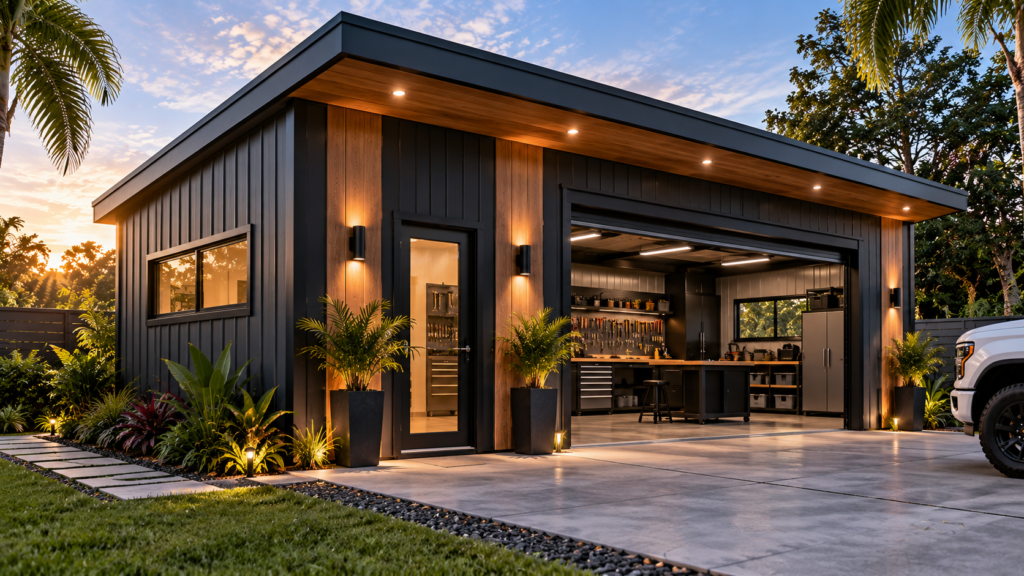
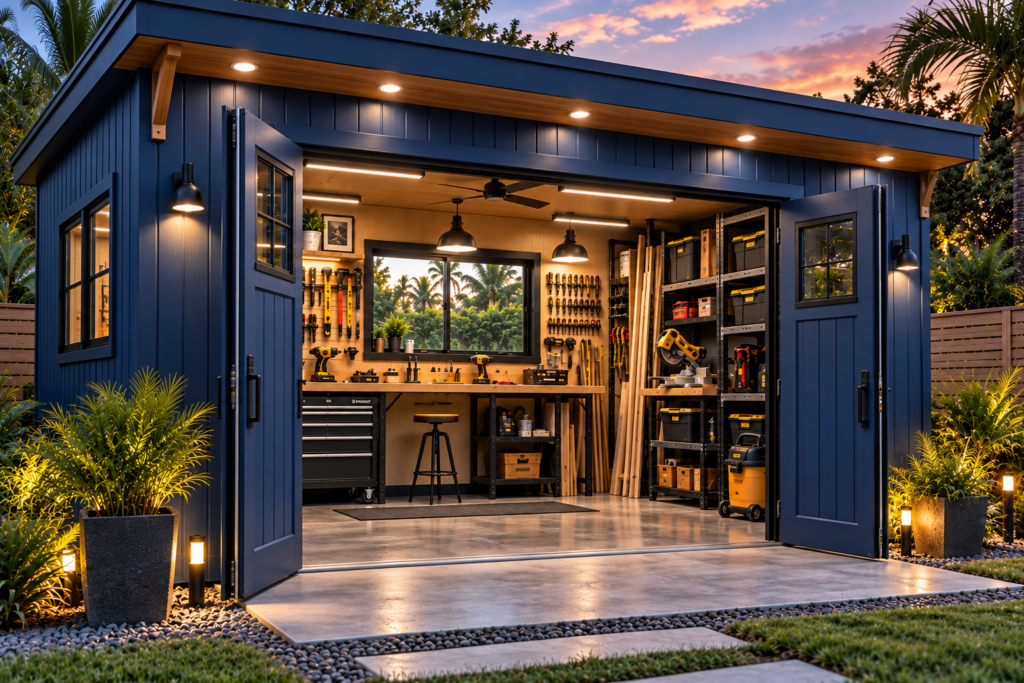
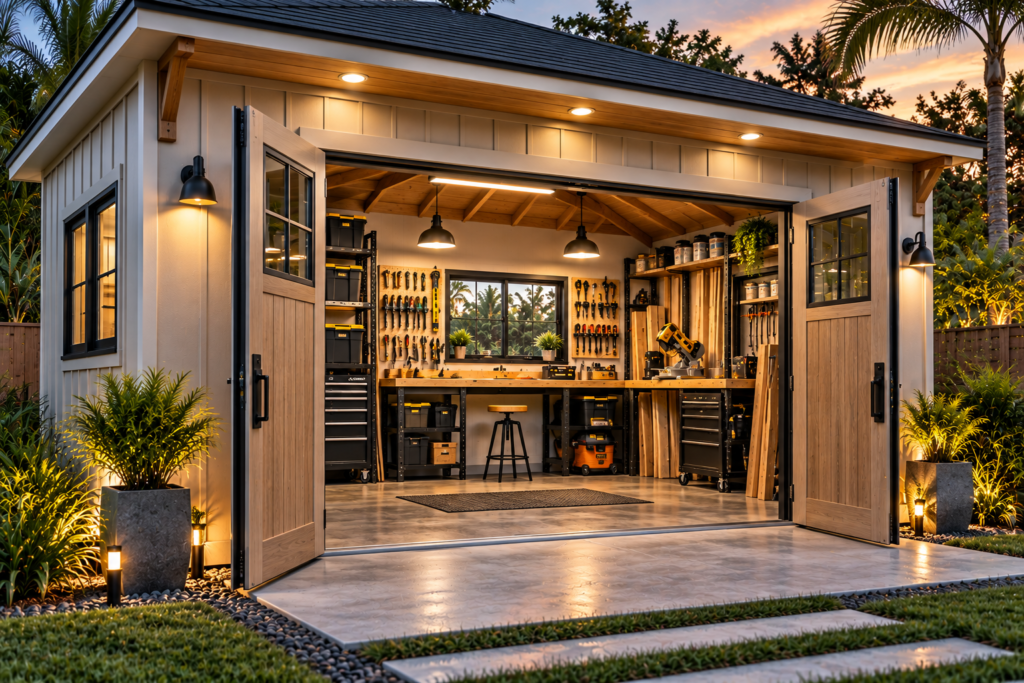
Multi-Purpose Shed Ideas | One Shed, Two Uses
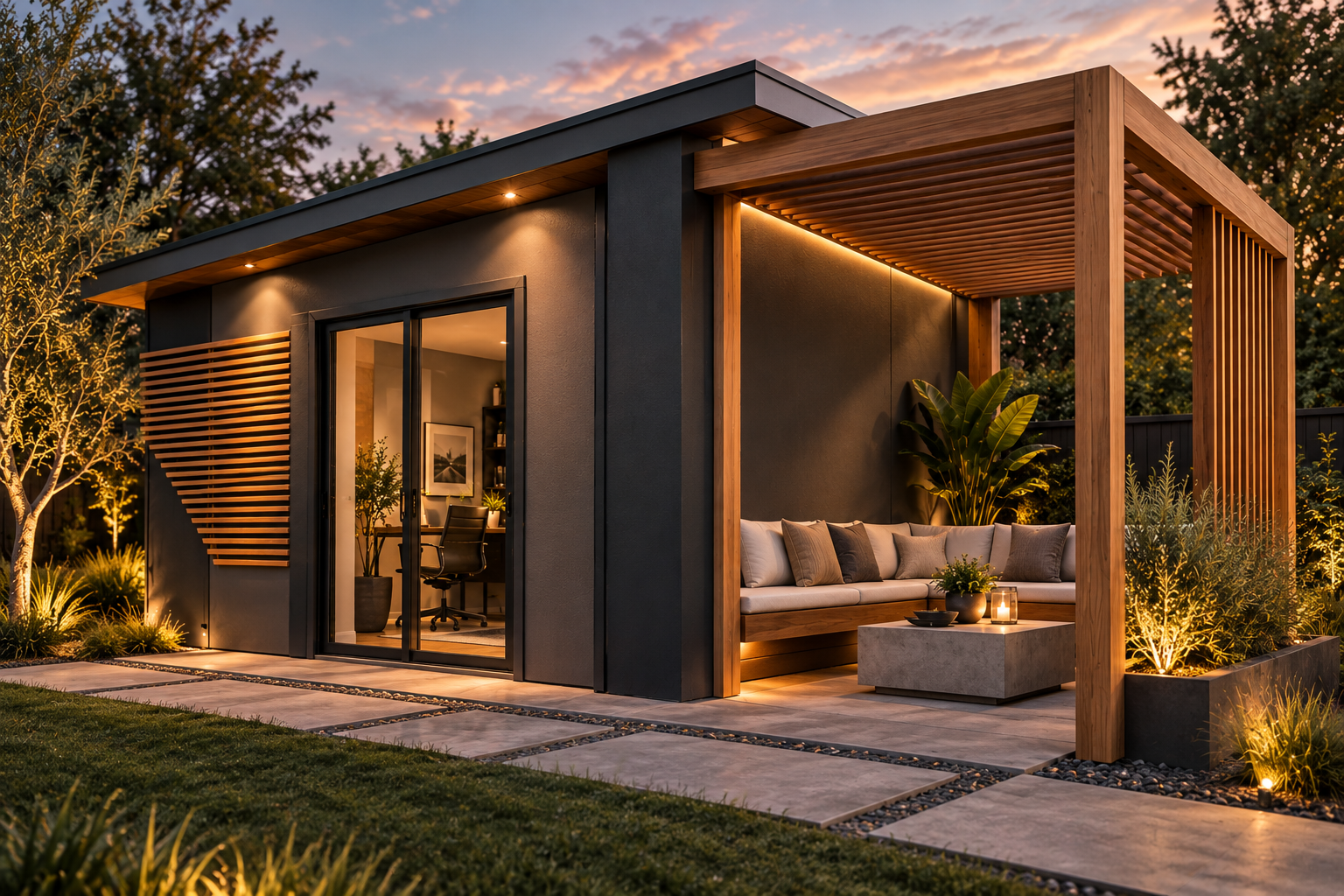
When backyard space is limited, a shed doesn’t have to serve a single purpose. Smart zoning, flexible furniture, and thoughtful storage can allow one structure to work as storage, workspace, studio, garden room, or something entirely your own.
One Shed, Two Purposes: Designing a Space That Does More
A lawn mower needs somewhere to live. So do the garden tools. But maybe you also need a workbench. Or a quiet place to work. Or somewhere to paint, repair furniture, exercise, pot plants, or simply get away from the activity inside the house. The traditional answer might be to choose one purpose and sacrifice the others. A better-designed shed can offer another option.
Let the space do more than one thing.
A multi-purpose shed combines practical storage with usable space by thinking carefully about where things belong, how often they’re used, and how the room needs to change throughout the day. The result isn’t necessarily a larger shed. It’s a smarter one.
Begin With Two Priorities
Trying to make a small building do everything usually results in a space that doesn’t do anything particularly well. Instead, identify the two functions that matter most. Maybe it’s:
Storage + Workshop
Garden Storage + Potting Room
Home Office + Household Storage
Art Studio + Supply Storage
Gym + Equipment Storage
Pool Storage + Changing Space
Once those priorities are clear, the layout can be designed around them. The goal isn’t to divide the shed equally in half. One activity may require most of the room while the secondary function only needs a carefully organized wall or corner. What matters is that both uses are considered from the beginning.
Storage + Workshop
This may be one of the most natural combinations. Lawn equipment, tools, hardware, materials, and household storage already tend to find their way into the same building. The challenge is preventing storage from slowly consuming the workshop. One solution is to concentrate storage vertically along one side of the structure. Tall shelving can hold containers and supplies. Long-handled tools can hang on wall systems. Larger equipment can stay near the entrance where it can move in and out easily.
The opposite wall can become the working side of the room. A bench. Tool storage. Task lighting. Electrical outlets. The center stays open. Instead of storage and workspace competing with each other, each has a defined place.
Garden Storage + Potting Room
A garden shed can be much more useful when it becomes a place to actually work with plants rather than simply store gardening equipment. Imagine a potting bench positioned beneath a window. Shelving above holds small containers and supplies. Hand tools hang nearby. Soil, fertilizer, pots, and watering equipment occupy dedicated storage areas below the work surface. Larger garden tools remain organized vertically near the entrance. The shed now serves two closely related purposes.
Everything needed for the garden is stored together, but there’s also somewhere comfortable to use it. Add a small covered area outside and the workspace can extend beyond the walls.
Office + Storage
This combination requires a different approach. An office needs to feel calm. Storage usually doesn’t. The solution is visual separation. Instead of open shelving filled with household items, storage can be concentrated behind doors, cabinets, or within a dedicated section of the structure. The office side can then remain visually clean. A desk near a window. Comfortable lighting.
A few shelves. Electrical access. Perhaps a small chair. When the storage isn’t visible, the room can feel like a workspace rather than a storage building with a desk inside it. This is an important principle in multi-purpose design:
Not everything needs to be visible simply because it’s in the same room.
Studio + Supply Storage
Creative spaces often need large amounts of storage. Paint. Fabric. Paper. Photography equipment. Craft supplies. Canvases. Tools. Materials. But creativity also benefits from open space. Built-in cabinets, drawers, shelving, and vertical storage can keep supplies close without allowing them to dominate the room. A large work surface can become the center of the studio. Natural light can influence window placement.
Mobile carts can hold frequently used materials and move wherever they’re needed. When the work session is finished, supplies return to their storage areas and the room becomes open again. The architecture doesn’t change. The way the room functions does.
Gym + Equipment Storage
Exercise equipment presents another interesting opportunity. Some items need permanent floor space. Others don’t. Weights, resistance bands, yoga mats, smaller accessories, and other equipment can often be stored vertically. A folding bench or movable equipment can free up floor area when needed. Mirrors can visually enlarge the interior while serving a practical purpose. Good ventilation and lighting become particularly important.
The goal is to preserve enough clear space to move comfortably while keeping equipment organized around the perimeter. When everything has a place, even a relatively small room can become surprisingly capable.
Pool Storage + Changing Space
A shed positioned near a pool can solve several backyard problems at once. One section can hold pool equipment, floats, towels, toys, cleaning supplies, and outdoor cushions. Another can provide a simple changing area. Hooks, benches, cabinets, and shelves can make the space practical without requiring a complicated interior. A small exterior overhang could provide shade.
An outdoor shower might be incorporated nearby where appropriate. The structure becomes part of the pool environment instead of merely being another storage building elsewhere in the yard.
Create Zones Without Creating Rooms
Multi-purpose doesn’t necessarily mean building interior walls. In fact, walls can make a small structure feel even smaller. Furniture and storage can define zones instead. A tall cabinet can establish the edge of a workspace. A change in lighting can distinguish one area from another. A workbench can anchor the workshop side. A rug can visually define an office or studio. Open floor space can separate storage from the primary activity. These subtle divisions preserve flexibility. And flexibility is one of the most valuable qualities a small structure can have.
Make Things Move
Not everything needs a permanent location. A rolling workbench can move toward the center when needed and return to the wall afterward. Mobile storage carts can follow the project. Folding tables can disappear when the floor is needed for something else. Stackable or nesting elements can provide additional surfaces without permanently consuming space. Movement allows the room to change. Instead of designing a fixed layout for one activity, the shed becomes a space that can respond to different activities.
Think Vertically
When two purposes share one structure, wall space becomes even more important. Shelving can extend upward. Cabinets can use the area above work surfaces. Hooks can organize tools. Overhead racks can store lightweight or seasonal items. Tall narrow storage can take advantage of corners that might otherwise be wasted. Using the walls efficiently leaves more of the floor available for people and projects. That’s especially important because floor space is what makes a small room feel usable.
Hide What You Don’t Need to See
Good organization isn’t only about fitting everything into the building. It’s also about controlling visual clutter. A wall filled with carefully organized hand tools might look appropriate in a workshop. The same wall could feel distracting in a home office. Cabinets, drawers, storage bins, and enclosed shelving allow the room to change character depending on its primary purpose. When you’re working, the workspace feels intentional.
When you need something from storage, it’s still there. This is one of the ways a shed can feel more like a designed room and less like a building filled with belongings.
Separate Access Can Change Everything
In some multi-purpose sheds, two entrances can be extremely useful. Imagine a storage section containing a mower and garden equipment. Wide exterior doors provide direct access to that area. On another side, a standard entry door opens closer to the office, studio, or workshop. Now retrieving the mower doesn’t require moving through the workspace. And entering the workspace doesn’t require opening the large equipment doors. The structure remains one building, but circulation supports both functions.
Design for Change
The most useful multi-purpose spaces aren’t designed only around today’s needs. Life changes. The home office might eventually become an art studio. The workshop might need more equipment. The gardening area may require additional storage. The children grow up. Hobbies change. Tools accumulate. A flexible structure can respond. Movable furniture, adaptable shelving, thoughtful electrical planning, and open floor space make future changes easier.
You don’t need to predict exactly what the shed will become. You simply don’t want today’s design to prevent tomorrow’s possibilities.
One Structure. More Possibility.
There is a tendency to think about buildings in categories. This is the garage. This is the office. This is the workshop. This is the storage shed. But small spaces don’t always need such rigid definitions. A well-designed shed can be practical on one side and creative on the other. It can store the things you need while providing space to do the things you enjoy. It can change from weekday to weekend. It can evolve as your needs change. That’s what thoughtful design can do. Not necessarily more square footage.
More possibility from every square foot.