Why Your Shed Should Look Like It Belongs With Your Home
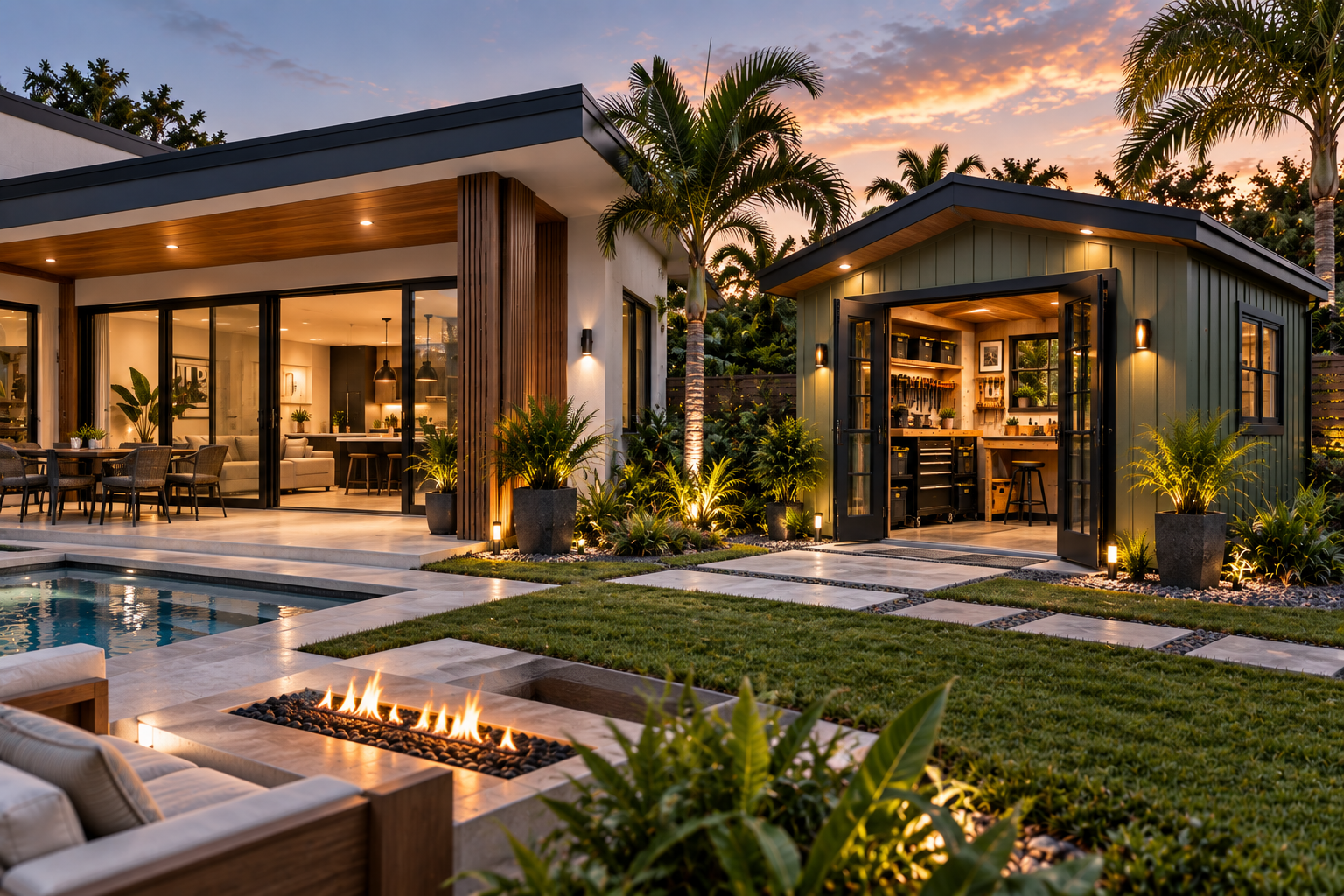
A shed doesn’t have to look like something added to the backyard as an afterthought. With the right proportions, materials, colors, roofline, lighting, and landscaping, it can become a natural extension of your home’s architecture.
Why Your Shed Should Look Like It Belongs With Your Home
For years, sheds have mostly been treated as utility buildings. Put one in the backyard. Fill it with lawn equipment and tools. Maybe hide it behind a fence or a few shrubs. Function came first. Design came much later—if it came at all. But a shed occupies the same property as your home. You see it from the patio, through windows, from the pool, across the lawn, and sometimes from the street.
Why shouldn’t it contribute to the architecture around it? At Shed Up, we believe an outdoor structure can be functional without looking purely utilitarian.
The goal isn’t simply to add a shed. It’s to design something that belongs there.
Start With the Home
A shed doesn’t need to be a miniature copy of the house. In fact, trying to duplicate every detail can sometimes make a small structure feel overly complicated. Instead, look for architectural cues. What shape is the roof? Are the lines primarily horizontal or vertical? What colors dominate the exterior? Are there strong contrasts?
Does the house use wood, stucco, siding, masonry, metal, or other materials? Are the windows traditional or contemporary? Those characteristics provide a visual language. The shed can speak that same language without repeating every word.
Rooflines Create Character
Few elements influence the appearance of a shed as much as the roof. A lean-to roof can create a clean, contemporary profile with strong horizontal lines. A gable roof offers a familiar form that can range from traditional to extremely modern depending on its proportions and detailing. A hip roof can give a structure a more substantial architectural presence while relating naturally to many residential homes. The roof also affects more than appearance.
Overhangs can provide shade and weather protection. Soffits create opportunities for warm architectural lighting. Roof height influences interior volume. A thoughtful roofline can turn a simple rectangular building into something distinctive.
Proportion Matters
Small buildings can be surprisingly sensitive to proportion. A door that’s too small can make a wall feel oversized. A window placed too high can feel disconnected from the interior. An overhang that’s too shallow may disappear visually, while one that’s too deep can overwhelm the structure. Even the relationship between wall height and roof height affects how the building feels. Good proportion is often something people recognize without consciously knowing why.
The building simply looks balanced. That’s why designing a shed isn’t only about fitting everything inside. The exterior composition matters too.
Use Materials With Intention
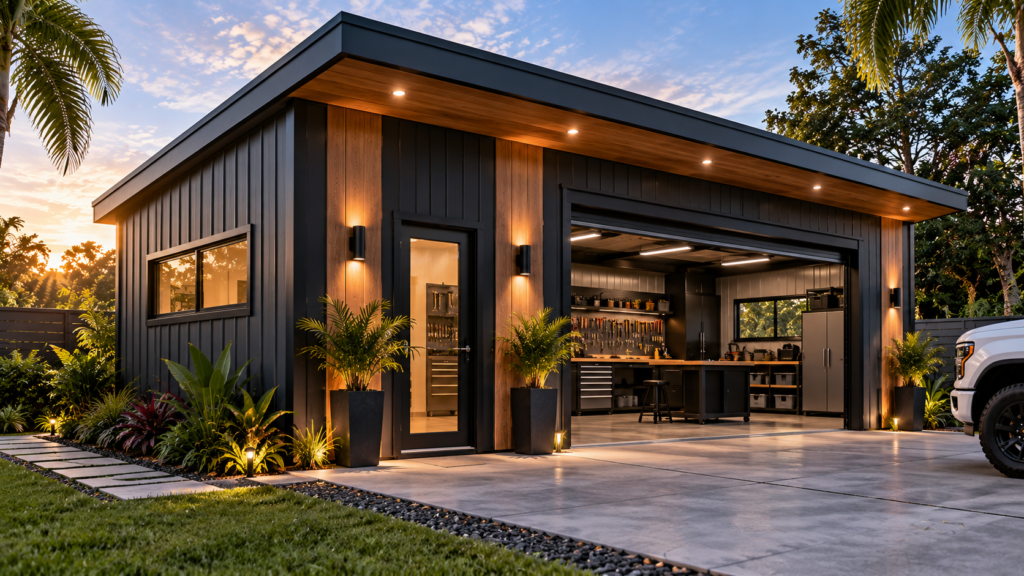
Materials are one of the easiest ways to connect a shed visually to the rest of the property. That doesn’t mean every exterior material on the house needs to appear on the shed. Sometimes one or two references are enough. A warm wood soffit might relate to wood accents on a modern home. Dark vertical siding can complement black window frames.
A light neutral exterior might pick up the color of existing stucco. Metal details can introduce contrast without dominating the design. The strongest combinations are often restrained. Rather than using five different materials to make a small building interesting, use a few materials well.
Color Can Connect—or Create Contrast
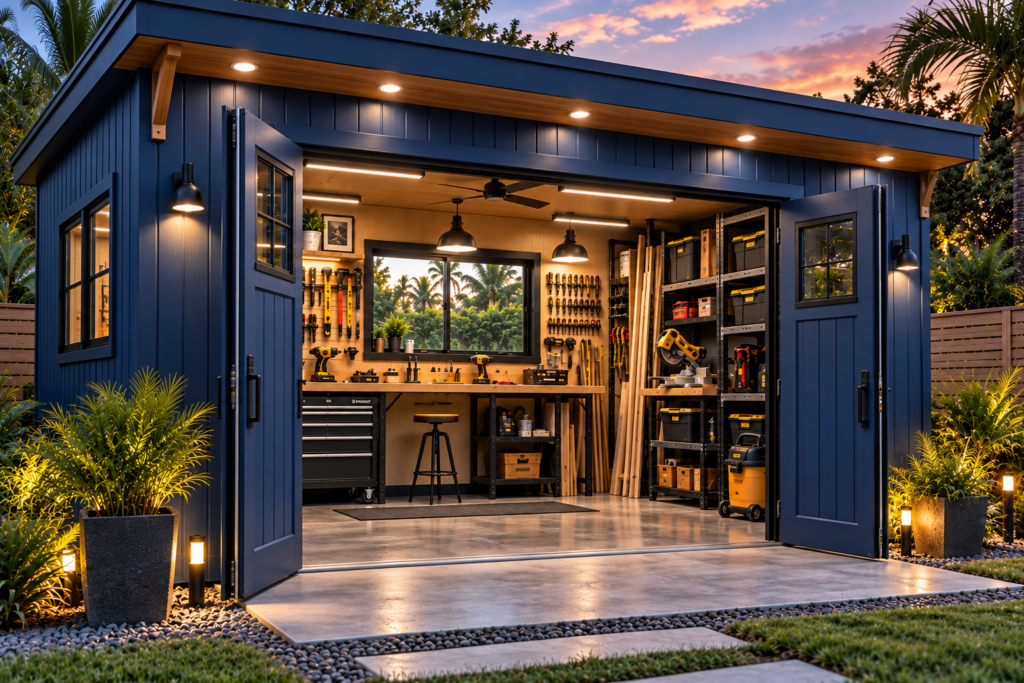
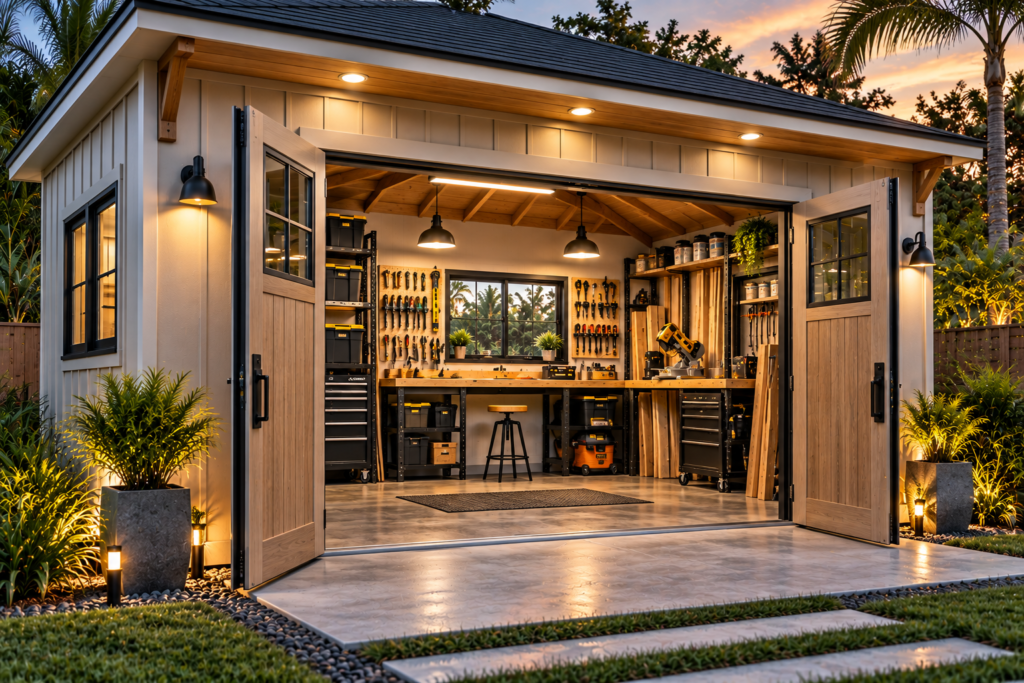
Matching isn’t the only way to create visual harmony. Sometimes contrast works better. A light-colored home might look great with a charcoal shed positioned against green landscaping. A darker home could be complemented by a warm off-white structure with black framing and natural wood accents. Navy, muted green, warm gray, and other architectural colors can also create personality while remaining sophisticated.
The important part is that the color feels intentional within the larger property. You should be able to look from the house to the shed and understand why those two structures exist together.
Windows Should Have a Reason
Windows are powerful design elements on a small building. From the outside, they affect proportion and character. Inside, they influence natural light, wall space, ventilation, and views. That makes window placement both an architectural and functional decision. A window above a workbench can provide natural light exactly where it’s needed. A tall window beside an entrance can make a compact structure feel more contemporary.
A carefully positioned window can frame a view of the garden while maintaining privacy from neighboring properties. The best placement works from both sides of the wall.
Doors Are Part of the Architecture
The door is often one of the largest visual elements on a shed. It deserves more attention than simply choosing something that fits the opening. Wide double doors can provide practical access for lawn equipment while creating a strong architectural feature. A glass-panel entry door can introduce light and make a studio or office feel more connected to the outdoors. Sliding doors can create a completely different character.
Colors and materials matter as well. A black-framed door against light siding creates contrast. Natural wood can introduce warmth. Matching the door color to the siding can create a quieter, more monolithic appearance. Function determines what the door needs to do. Design determines how it becomes part of the building.
Lighting Changes Everything After Sunset
A shed doesn’t disappear when the sun goes down. Outdoor lighting can transform it. Small wall sconces can define an entrance. Recessed lights beneath an overhang can wash warm light across siding and wood. Low landscape lighting can connect the building to pathways and planting beds. Interior light visible through a window can give the structure another layer of depth. Lighting shouldn’t turn a backyard shed into a billboard.
A few carefully positioned fixtures are usually enough. The goal is subtlety. During the day, the architecture defines the structure. At night, lighting reveals it.
Don’t Stop Designing at the Walls
One of the easiest ways to make a shed look disconnected from the property is to treat the design as finished the moment construction reaches the exterior walls. The surrounding area matters. A simple walkway creates a connection. A few architectural plants soften the foundation. Gravel or stone can define the edge of the building. A small concrete pad can extend the usable workspace outside.
Planters can frame an entrance. Landscape lighting can visually connect the shed with other areas of the backyard. These elements don’t necessarily require elaborate landscaping. They simply help the structure settle into its environment.
Modern Doesn’t Mean Cold
Modern design is sometimes associated with stark white boxes, enormous glass walls, and minimal interiors. But modern architecture can be warm. Natural wood. Soft exterior lighting. Landscape planting. Textured materials. Warm neutral colors. Deep overhangs. The modern part comes from clarity—clean forms, purposeful details, thoughtful proportions, and removing unnecessary visual clutter. That creates room for other influences.
A shed can be modern with coastal elements. Modern with traditional influences. Modern with rustic materials. Modern with tropical landscaping. The architectural foundation stays clean while the details give it personality.
The Shed Can Have Its Own Identity
Designing a shed to belong with the home doesn’t mean eliminating individuality. The smaller structure can sometimes take risks the main house doesn’t. A darker color. A stronger wood accent. A more dramatic door. A different roof form. A slightly more contemporary interpretation of the home’s architecture. Because of its scale and location, the shed can become a small architectural statement within the larger property. It complements the house without pretending to be the house.
From Something You Hide to Something You Notice
A traditional utility shed is often positioned where it will attract the least attention. A thoughtfully designed structure changes that relationship. You may want to see it from the patio. You may want the pathway leading toward it to become part of the landscape. You may enjoy seeing its lights come on in the evening. The structure stops feeling like leftover backyard storage and begins feeling like another intentionally designed space on the property.
That doesn’t make storage any less important. The lawn mower still needs somewhere to go. The tools still need organization. The bicycles still need space. But function and architecture don’t have to be competing priorities. A shed can do the practical work it was built to do while also improving the environment around it. That’s the difference between simply putting a building in the backyard and designing one for the backyard.
It shouldn’t look like it was added later. It should look like it was always supposed to be there.